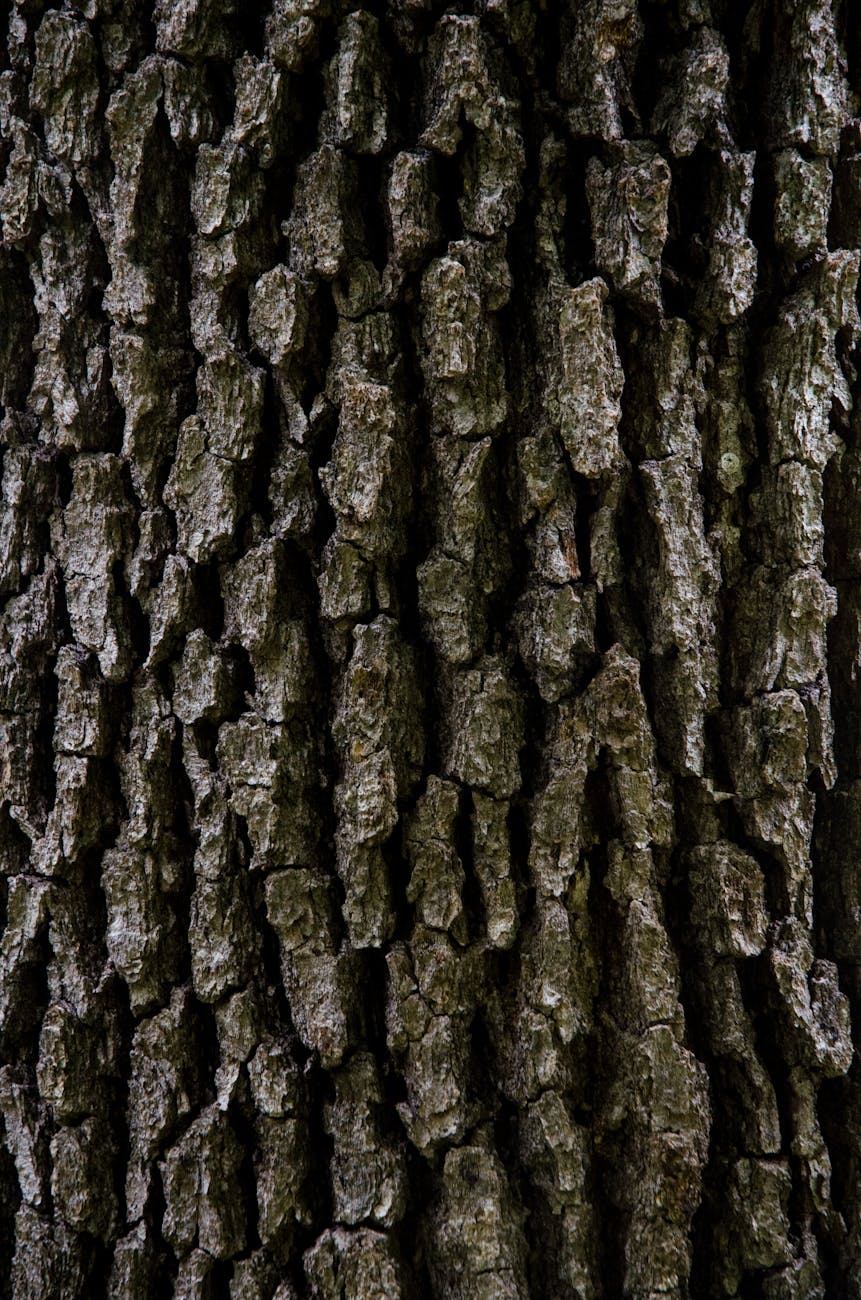
Tree identification in winter invites you to see forests in a completely new way. Bare branches, textured bark, and quiet buds become guides to understanding the personalities of trees. As someone who works for Darke County Parks, I couldn’t resist learning how to recognize them, and Brent Charette, Director of Land Stewardship at the Arc of Appalachia, turned out to be the perfect guide.
Brent’s love for trees began when he was a boy, and now his work involves caring for large forest parcels. His primary goal for us, his students, was simple but profound: learn to see trees differently. He taught us to notice the patterns in bark and the shapes of buds, to study silhouettes, colors, and textures from a distance, and to find fruits and nuts that carry distinctive “personalities.” We learned to read habitat clues—how trees grow in certain landscapes and what that reveals about their roots and preferences. Just like humans, I realized, environment shapes a tree’s growth, color, pattern, and overall wellbeing. At first glance trees may seem typical, but up close, each one tells its own story.
Learning Tree Identification in Winter Through Bark, Buds, and Habitat
We began by hearing Brent’s own story—his lifelong love for trees and the many jobs that revolved around them. Even his years working for a lumber company offered unexpected lessons: some trees have a distinct smell when cut. These early experiences shaped his deep affection for trees and made him a remarkable teacher.
He showed us how to recognize the diamond pattern of hickory bark and reminded us to check whether branches were opposite or alternate—explaining that if they were opposite, the tree was likely a maple, ash, dogwood, or buckeye. He asked whether the buds were scaly or valvate, or whether a scratch on the limb revealed a scent. “Don’t look at the leaves,” he would say—even if a few still clung to the branches.
Learning tree identification in winter requires shifting your attention from leaves to buds, bark, and habitat clues. Brent had us feel the spongy texture of American elm bark or the oval trunk of basswood, pointing out how basswood often grows in clusters. Today’s lessons became tomorrow’s reminders as we revisited the same trees with fresh eyes.
With Brent’s guidance, we moved from observation to exploration—digging for nuts and fruits and studying the details that make each tree unique. We noticed acorns with different “hats,” each oak nut with its own personality. Shagbark hickory bark, with its long peeling strips, began to look like Bigfoot to me. The ridges of red oak bark reminded me of ski slopes, sliding down the trunk. The acorn of the red oak wore a jaunty little beret, while the bur oak looked like a child with a winter hat pulled too low, curls peeking out. Some acorn caps had tight, neat scales; others looked like wild, unruly hair. Bur oak bark was chunky and corky, while white oak bark formed scaly plates at the base that gradually peeled upward.
One surprising benefit of winter tree identification is how much more clearly textures and silhouettes stand out.
The Challenge of Seeing Clearly
After hours of observing, we moved deeper into the forest where identification became trickier. Looking from bark to bark, I felt overwhelmed—each tree seemed to have its own “signature,” and after so many, they all blurred together.
Brent would stop at a trunk and ask, “What is it?” Sometimes someone could blurt out the name. Other times we knew but stayed quiet, not wanting to be wrong. Often we simply needed more evidence: Was it a young tree? A variation we hadn’t seen yet? A species that grew differently in this habitat?
So we examined the buds—if we could reach them—or Brent directed our eyes into the treetops.
“Do you see any fruit?”
“Scales or valvate?”
“Duckbill?”
“What color is the bud?”
“SULFUR!”
“Tulip Tree!”
Every question brought us deeper into the art of tree identification in winter.
Evening Recap: Where It All Comes Together
After a full day in the field, the real test came in the evening. Brent gathered us for a recap after supper. From 9 a.m. until well after dinner, we had been hiking through fields, along rivers, and deep in forests—observing trees, reviewing their traits, and discovering new ways to connect with them.
We studied photos of trees, fruits, and buds. He continued to ask:
“What tree is this?”
“Scales or valvate?”
“Does it have trichomes?”
“What does the bud smell like?”
Someone would shout, “The bud smells like a skunk! It’s American buckeye!”
Then came the final challenge: numbered samples laid out on long tables—buds, acorns, nuts, shells—for us to identify. Our hands moved from one specimen to another, trying to build the right pathways in the brain.
Even with notes, I still misidentified a dogwood bud which, I knew, looked like a mushroom. I confused red maple with red oak. Maples alone made me dizzy: silver maple bark has “cat scratches,” while sugar maple bark lifts in plates. The red maple bud looks like a trident; the silver maple bud is silver.
As the day continued, I felt myself building mental pathways that made tree identification in winter feel more intuitive.
The Pathways Take Time
The course was so full of information that my mind hadn’t yet built the pathways needed for confident identification. Tree families could look different, depending on were they grow in a forest, a riparian area, or an open field. The red maples near the river were massive and far more red-brown than any others I had seen.
So much was shared, and even as I write this, I feel a yearning to keep learning the unique signatures of each species.
My body remembers the joy of it all—and it wants to return to the woods.
Have you tried winter tree ID? Share your experience in the comments.
Leave a Reply